
Nick's take on Mr. Sandow's 'riff' has much to recommend it, but in particular I was struck by his critical view of Sandow's pledged commitment to pluralism.
Nick writes:
"I hope that beyond academic pedantry, this response has come across as a reasonable, reasoned defence of post-war modernism. My motivation is ironically not very modernist in nature: I would like this aesthetic to be fairly represented in the concert hall, alongside the canon, ‘alt-classical’ or any other relevant subgenre out there. Indeed, aesthetic pluralism seems absolutely vital to me in maintaining some sort of classical tradition, as that is what my and younger generations have come to expect in our listening lives. And perhaps most significantly, where else these days do we find the values- experimentation, intellectualism, criticism, courage- high modernism at its best represents? I would be the first to acknowledge the "unnatural, distorted and unhealthy" elements of this aesthetic, but we shouldn’t throw the baby out with the bathwater."
Pluralism is hard, or at least it's hard to do well. I danced around this as well in my post, wondering if Mr. Sandow had really thought carefully enough about his call for connections to popular music. In the end my criticism was not that Mr. Sandow wasn't being pluralist in his out look but rather about the character of his pluralism; to my mind his pluralism was doing little to move out of his own ideologies of concert-making, and thus are not really engaging his Other (for him, in this argument, popular music) in its own terms and on its own terrain— the particular aesthetics, politics and philosophical stances of popular music making. I've written about this before; flabby pluralisms and arguments that sneak towards totalization and transcendence while using a rhetoric of inclusion and openness. We and Mr. Sandow would do well to remember that populism and pluralism are quite different things.
More importantly, Nick's comment highlights the simple but difficult truth that differing aesthetic agendas do, in fact, differ— they differ in their role, their function, their potential and their interests. Sandow's argument takes one notion of concert life, and sets it as the transcendental yardstick for all future evaluations. This may be a bit too broad a reading of the particular posting that we are referencing in this thread, but I strongly suspect that this is what is going on here, especially since he did it again, and again, and again. You get the idea.
There some precedents for thinking about these questions carefully. As preview of a thread to come:Rancière's Aesthetics and Its Discontents considers (within the discourse of the art world) the tendency of art practices to embrace the quotidien, and to flee from the same. The two tendencies draw their power from the same opposition of the realm art and the realm of the everyday. Rancière demonstrated that this disjuncture is, in the aesthetic regime, unresolvable, and as such will always provoke different sentiments and responses.
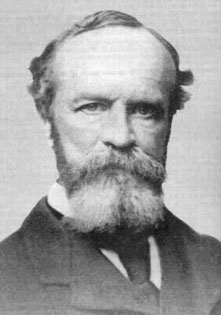
At this point, a quote from the man who wrote the book(s) on pluralism seems apropos.
"It is curious how little countenance radical pluralism has ever had from philosophers. Whether materialistically or spiritualistically minded, philosophers have always aimed at cleaning up the litter with which the world apparently is filled. They have substituted economically and orderly conceptions from the first sensible tangle; whether these were morally elevated or only intellectually neat, they were any rate always aesthetically pure and definite, and aimed at ascribing to the world something clean and intellectual in the way of inner structure. As compared with all these rationalizing pictures, the pluralistic empiricism which I profess offers but a sorry appearance. It is turbid, muddled, gothic sort of affair without a sweeping outline and with little pictorial nobility."
William James, A Pluralistic Universe
(Cambridge, Mass.: Harvard
University Press, 1977), p. 26.
(Cambridge, Mass.: Harvard
University Press, 1977), p. 26.
Nick's critique highlights Sandow's oversimplification of modernist aesthetics, and his cavalier effort to subsume alt-classical practice into classical concert culture feels like flabby pluralism, which overwrites the variety of the world, leaving only simulacra and revenants of the true diversity of the world.