
Under such conditions, one is led to ask whether music might not have a metaphysical significance rather than an ethical function. Throughout history, those human beings who are fond of allegory have sought that which is signified by music beyond the sound phenomenon, "the invisible harmony is more powerful than the visible". For there is an invisible and inaudible harmony, suprasensible and supra-audible, and this is the true “key to song.” For Clement of Alexandria and Saint Augustine, for the English mystic Richard Rolle, any singing perceptible to the ears and the body is the exoteric envelope of a smooth, ineffable, and celestial melody. Plotinus says that music perceptible to the senses is created by music anterior to sensible perception. Music is of another realm. Harmony, if we believe Fabre d’Olivet, resides neither in the instrument nor in physical phenomena (it is worth recalling that Fabre d’Olivet was interested in Pythagorean arithmology, the Hebrew language, and a kind of “musicosophy,” a philosophical music that would transmute souls). Richard Rolle and Antoine de Rojas heard angel music: no doubt, our orchestral concerts are mere pale understudies to such celestial concerts.
Music and the Ineffable
Vladimir Jankelevich
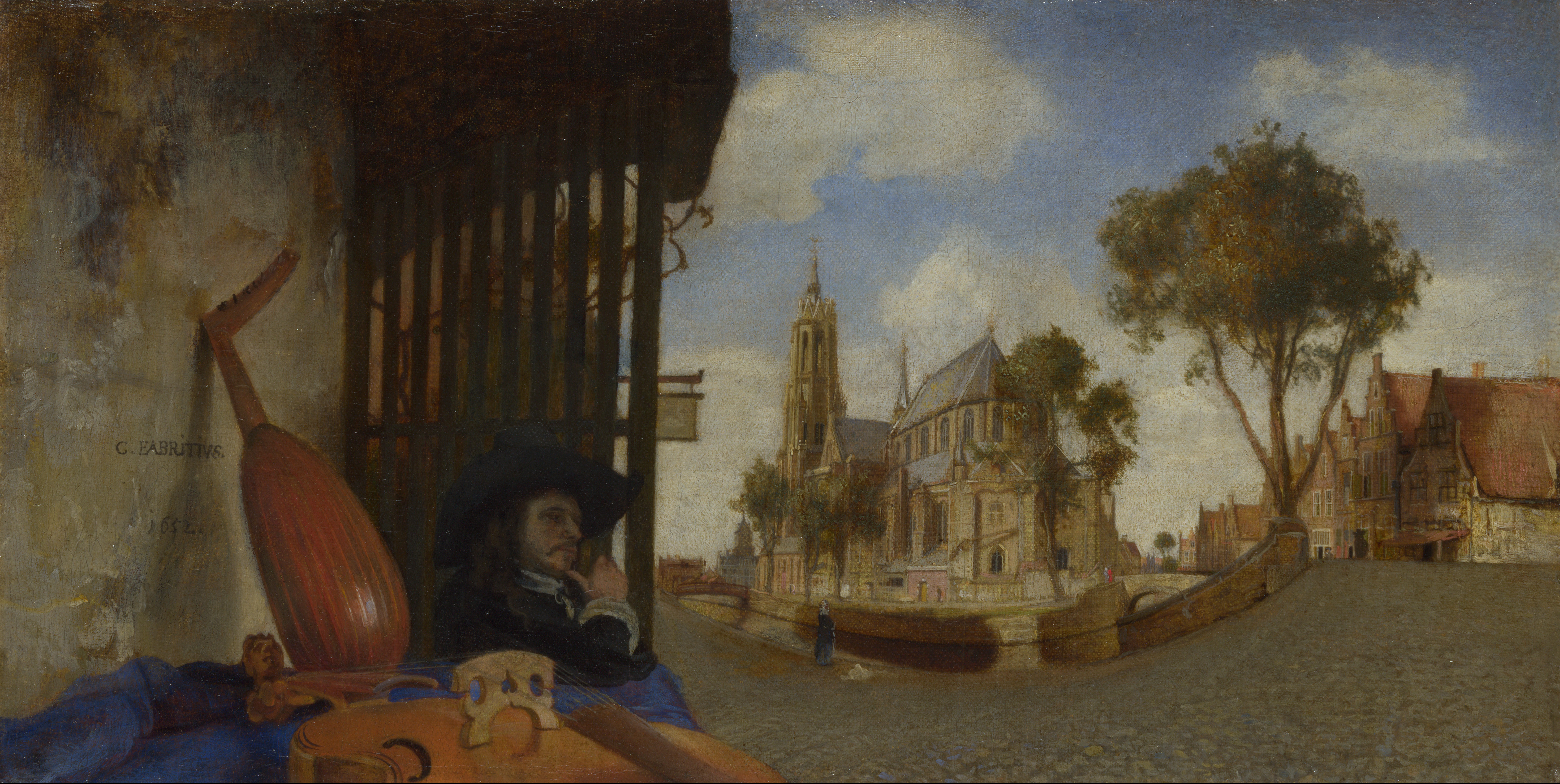
Carel Fabritius (1622–1654)
A View of Delft, with a Musical
Instrument Seller's Stall